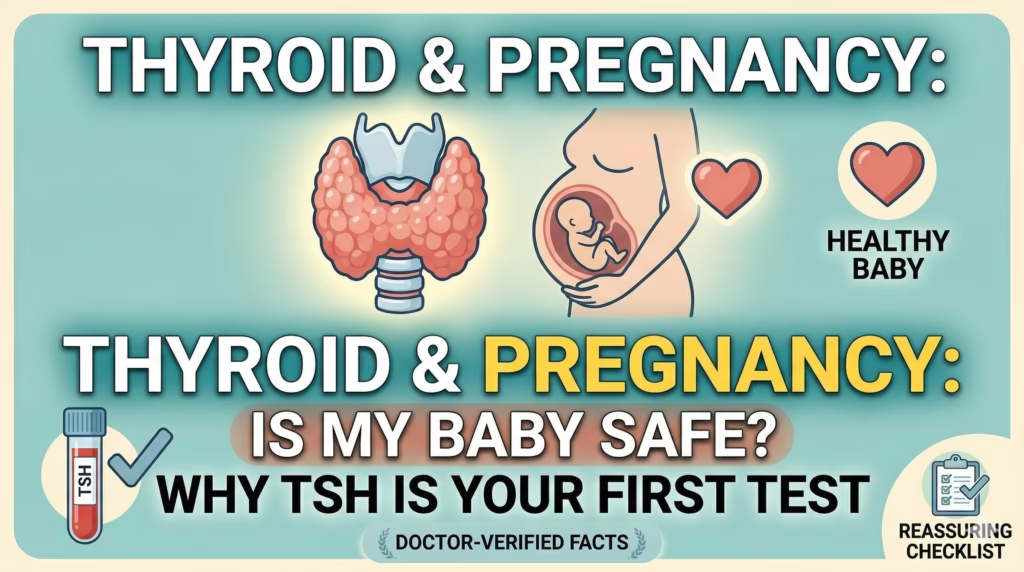
When you walk into your first prenatal consultation, you are likely overwhelmed with excitement and perhaps a list of a hundred questions. You expect the ultrasounds and the vitamins, but many of my patients are surprised when one of the very first blood tests we order is for TSH (Thyroid Stimulating Hormone).
“Doctor, I’ve never had a thyroid problem in my life,” they often say. “Why is this so important now?”
The answer lies in the incredible way your body transforms to support a new life. Your thyroid—that tiny, butterfly-shaped gland in your neck—is the silent engine of your metabolism. During pregnancy, that engine has to work 50% harder.
In this comprehensive guide, we are going to explore why the thyroid is the “master controller” of your pregnancy and why managing your TSH levels is the simplest, most effective way to ensure your baby’s brain and body develop perfectly.
The Butterfly Effect: What is the Thyroid?
Before we talk about pregnancy, let’s understand the gland itself. The thyroid produces hormones (primarily T3 and T4) that tell every cell in your body how much energy to use. It regulates your heart rate, your temperature, and how quickly you burn calories.
Shutterstock
In pregnancy, these hormones take on a new, critical job: building a baby. For the first 10 to 12 weeks of pregnancy, your baby does not have a functioning thyroid gland of its own. It is completely dependent on you to provide the thyroid hormones necessary for its brain development and physical growth. This is why the first trimester is the most crucial time for thyroid screening.
Decoding the Alphabet Soup: What is TSH?
When we test your thyroid, we primarily look at TSH. It is a common misconception that TSH is a thyroid hormone. It actually comes from your brain (the pituitary gland).
Think of TSH as the “Manager” and the Thyroid as the “Worker.”
- If the Thyroid is working slowly (Hypothyroidism), the Manager (TSH) screams louder to wake it up. This results in High TSH levels.
- If the Thyroid is working too fast (Hyperthyroidism), the Manager (TSH) goes quiet. This results in Low TSH levels.
As your doctor, I look at the TSH level as an “early warning system.” It tells me if your thyroid is struggling to keep up with the demands of pregnancy long before you feel any symptoms.
Why TSH is the “First Priority” in Prenatal Care
You might wonder why we don’t wait for symptoms like fatigue or weight gain to appear. The reason is that pregnancy symptoms often mimic thyroid symptoms! Being tired, feeling cold, or having “brain fog” are common in the first trimester, making it impossible to diagnose a thyroid issue based on feeling alone.
1. Protecting the Baby’s Brain Development
Thyroid hormones are the “building blocks” for the fetal brain. Research shows that maintaining optimal TSH levels in the mother during the first trimester is directly linked to better cognitive outcomes for the child later in life.
2. Preventing Pregnancy Complications
Undiagnosed or poorly managed thyroid issues can increase the risk of:
- Preeclampsia: A sudden rise in blood pressure.
- Anemia: Which we already know is a concern for many Indian women.
- Miscarriage or Preterm Birth: Keeping TSH stable significantly lowers these risks.
- Low Birth Weight: Ensuring the baby gets enough energy to grow to a healthy size.
Thyroid vs. Pregnancy: Is it “Normal” or Something More?
This table helps you distinguish between the expected changes of pregnancy and the symptoms of an underactive thyroid (Hypothyroidism).
| Symptom | Normal Pregnancy | Potential Thyroid Issue |
|---|---|---|
| Fatigue | Common in 1st & 3rd trimesters; usually improves with a nap. | Constant, overwhelming exhaustion that doesn’t improve with rest. |
| Weight Gain | Gradual and consistent with the baby’s growth. | Sudden or excessive weight gain that feels “out of sync” with your diet. |
| Feeling Cold | Most pregnant women feel “hot” due to increased blood volume. | Feeling unusually cold or needing a sweater when others are comfortable. |
| Mood | Mild mood swings or “baby brain” (forgetfulness). | Persistent low mood, severe “brain fog,” or feelings of depression. |
| Skin & Hair | “Pregnancy glow” or thicker hair due to hormones. | Very dry, itchy skin and unusual hair thinning or brittle nails. |
| Digestion | Morning sickness or occasional constipation. | Severe, chronic constipation that doesn’t respond to fiber or water. |
| Heart Rate | Slight increase in pulse is normal. | A very slow heart rate (bradycardia) or feeling “sluggish.” |
The “Normal” Range: Why it Changes During Pregnancy
This is where many patients get confused. You might look at your lab report and see that your TSH is 3.5 mIU/L. For a woman who isn’t pregnant, that is perfectly normal. However, for a woman in her first trimester, that might be considered “high.”
In pregnancy, we aim for tighter control. While every laboratory has slightly different ranges, the general guidelines we follow at FMRI are:
- First Trimester: Ideally between 0.1 and 2.5 mIU/L.
- Second Trimester: 0.2 to 3.0 mIU/L.
- Third Trimester: 0.3 to 3.0 mIU/L.
If your levels fall outside these ranges, it doesn’t mean something is wrong with your baby. It simply means we need to provide your body with a little extra support.
The Indian Context: Why We Are More At Risk
In my practice in Gurugram, I see a very high prevalence of thyroid disorders. There are a few reasons for this:
- Iodine Levels: While salt is iodized in India, certain regional diets or the use of non-iodized specialty salts can lead to fluctuations.
- Autoimmune Factors: Many Indian women have “subclinical” hypothyroidism, where the body produces antibodies against the thyroid. Pregnancy often acts as a “trigger” that pushes this into a full-blown condition.
- The “Double Burden”: Many Indian women already struggle with iron deficiency (Anemia). Since iron is required for the body to process thyroid hormones, these two conditions often go hand-in-hand.
Managing Your Thyroid: It’s Simpler Than You Think
If I tell a patient they need thyroid medication, the first question is usually: “Is it safe for the baby?”
The answer is a resounding YES. The medication we prescribe (usually Levothyroxine) is not a “drug” in the traditional sense. It is a synthetic version of the exact same hormone your body is supposed to be making. It does not cross the placenta in a harmful way; in fact, it is what the baby is waiting for!
Dr. Mamta’s Tips for Thyroid Success:
- Take it on an Empty Stomach: Thyroid medication is picky. It needs to be taken first thing in the morning with water, at least 30–60 minutes before tea, coffee, or breakfast.
- Keep your Prenatal Vitamins Separate: Iron and Calcium supplements can block the absorption of thyroid hormones. Always wait at least 4 hours after taking your thyroid pill before taking your iron or calcium tablets.
- Don’t Skip Tests: Your blood volume increases as the baby grows, meaning we may need to adjust your dose. Expect a TSH blood test every 4 to 6 weeks.
FAQs: Your Concerns Answered
“Will I have to stay on this medicine forever?” Not necessarily. Many women develop “Gestational Hypothyroidism,” which resolves after the baby is born. We usually re-test your levels 6 weeks after delivery to see if the medication can be stopped.
“I forgot my pill today! What should I do?” Don’t panic. Take it as soon as you remember, or if it’s already evening, just take your regular dose the next morning. Consistency is key, but one missed pill won’t harm the baby.
“Can I manage this through diet alone?” While a healthy diet rich in iodine (found in dairy, eggs, and iodized salt) is important, diet alone cannot replace missing hormones. Think of the medication as the “foundation” and your diet as the “decoration.”
A Final Word of Reassurance
A thyroid diagnosis in pregnancy is not a sign that your body is failing. In fact, identifying a thyroid issue early is a success story. It means we have caught a potential problem before it could affect your baby’s growth.
At Fortis Memorial Research Institute, we believe in Comprehensive Antenatal Care. We don’t just look at the baby; we look at the mother as a whole. Your thyroid health is a vital chapter in your pregnancy story, and we are here to ensure it is a healthy one.
If you have a family history of thyroid issues, or if you are feeling unusually exhausted, don’t wait for your next scan. Let’s check those TSH levels and give your baby the best possible start.

Dr. Mamta Pattnayak is working as a Additional Director in Gynae and Obstetrics Dept. in Fortis Hospital, Gurgaon. Dr. Mamta Pattnayak is an MBBS graduate from S.C.B. Medical College, Cuttack and completed her MD (Obstetrics & Gynaecology) from Sambalpur University in 2003. With a rich experience of over years to her credit, Dr. Mamta has undergone training on advance lap Gynae by Ethicon. Done hand’s on Colposcopy course by RCOG. She is certified as a mentor in RCOG training course in Max Hospital Saket. Dr. Mamta has been associated with several organizations like Moolchand Hospital, New Delhi besides others. Her last assignment was at Max Super Specialty Hospital, Saket, New Delhi. Recently she has also started her private clinic at: Mother’s Touch HealthCare Centre: 395P, Sector 39 Rd, opposite to Medanta Hospital, near Gurudwara, Sector 39, Gurugram, Haryana 122004