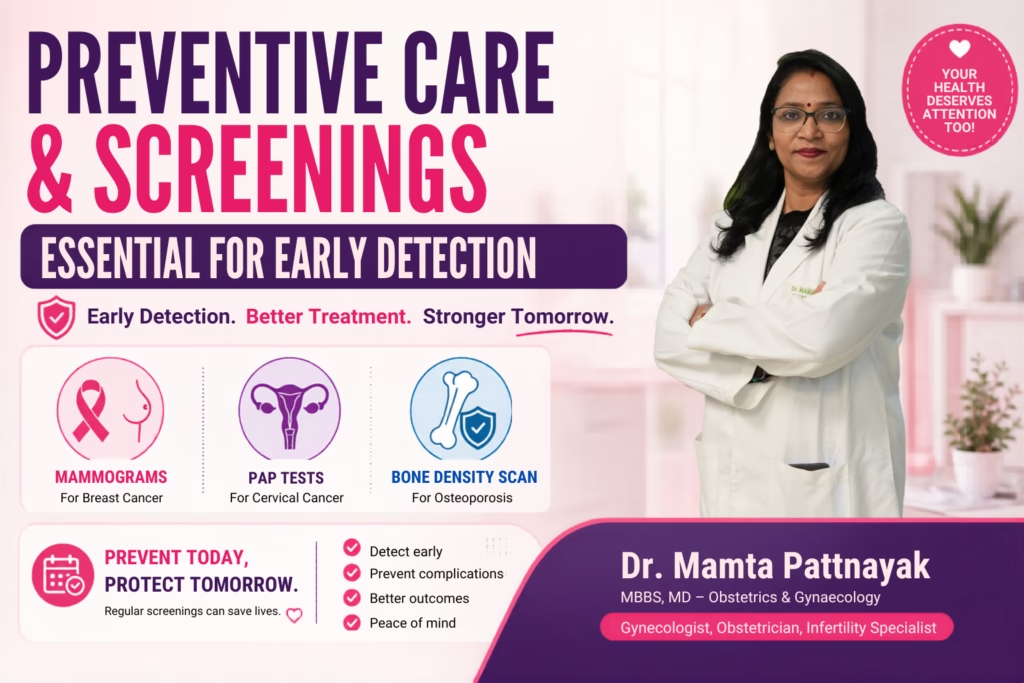
Women often spend so much time caring for their families, careers, and responsibilities that their own health takes a back seat. Many patients tell me, “I’ll get checked once I feel symptoms.”
But here’s the truth:
Many serious health conditions develop silently and may not show symptoms in the early stages.
This is why preventive care and regular health screenings are so important.
Preventive screenings help us detect diseases before they become serious, allowing for earlier treatment, better outcomes, and in many cases, complete prevention.
As women, prioritizing your health is not selfish—it is necessary.
What Is Preventive Care?
Preventive care means taking steps to protect your health before illness develops.
This includes:
- Regular medical check-ups
- Health screenings
- Vaccinations
- Monitoring risk factors
Instead of waiting for symptoms, preventive care focuses on early detection and prevention.
Why Early Detection Matters
Conditions like cervical cancer, breast cancer, osteoporosis, diabetes, and high blood pressure often begin quietly.
When detected early:
- Treatment is usually simpler
- Recovery rates are higher
- Complications can often be prevented
Early detection truly saves lives.
Essential Health Screenings Every Woman Should Know About
1. Pap Test & Cervical Cancer Screening
What Is a Pap Test?
A Pap smear is a simple test used to detect abnormal cells in the cervix—the lower part of the uterus.
These abnormal changes can be identified and treated before they turn into cervical cancer.
Why Is It Important?
Cervical cancer is one of the most preventable cancers in women, but only if regular screening is done.
The test:
- Takes only a few minutes
- Is usually painless
- Can detect precancerous changes early
Who Should Get a Pap Test?
In general:
- Women should begin screening from their early adult years as advised by their doctor
- Frequency depends on age, previous results, and medical history
Your gynaecologist will guide you on the right schedule.
2. Mammograms & Breast Cancer Screening
What Is a Mammogram?
A mammogram is an X-ray screening of the breasts used to detect early signs of breast cancer.
Why Are Mammograms Important?
Breast cancer may not cause pain or obvious symptoms in the early stages. Mammograms can detect tiny changes long before they are felt.
Early detection significantly improves:
- Treatment success
- Recovery rates
- Survival outcomes
When Should Women Start Mammograms?
This depends on:
- Age
- Family history
- Personal risk factors
Women with a strong family history may need earlier screening.
Breast Self-Awareness Matters Too
Women should also become familiar with how their breasts normally look and feel.
Consult your doctor if you notice:
- A lump
- Skin changes
- Nipple discharge
- Unusual pain
3. Bone Density Scan (DEXA Scan)
What Is Osteoporosis?
Osteoporosis is a condition where bones become weak and fragile, increasing the risk of fractures.
It is especially common after menopause due to declining estrogen levels.
What Is a Bone Density Scan?
A DEXA scan measures bone strength and helps assess fracture risk.
The test is:
- Quick
- Non-invasive
- Painless
Who Should Get Screened?
Bone density screening is often recommended for:
- Postmenopausal women
- Women above a certain age
- Those with risk factors like low calcium intake or family history
Other Important Preventive Health Screenings
Women should also monitor overall health through:
- Blood pressure checks
- Blood sugar testing
- Thyroid screening
- Cholesterol tests
- Routine pelvic examinations
Your reproductive health and overall health are closely connected.
Why Many Women Delay Screenings
Unfortunately, many women postpone health check-ups because of:
- Fear or anxiety
- Busy schedules
- Financial concerns
- Belief that “no symptoms means no problem”
- Discomfort discussing intimate health issues
But delaying screenings can allow silent conditions to progress unnoticed.
Symptoms You Should Never Ignore
Even with regular screenings, certain warning signs require medical attention:
- Abnormal bleeding
- Breast lumps
- Persistent pelvic pain
- Unusual vaginal discharge
- Sudden weight changes
- Frequent fractures or bone pain
Never ignore changes in your body.
Preventive Care at Different Stages of Life
In Your 20s & 30s
- Pap tests
- HPV vaccination
- Reproductive health checks
In Your 40s & 50s
- Mammograms
- Hormonal and metabolic health monitoring
- Blood pressure and diabetes screening
After Menopause
- Bone density scans
- Heart health monitoring
- Continued cancer screening
Each life stage brings different health priorities.
How to Make Preventive Care Part of Your Routine
Simple habits can make a big difference:
- Schedule annual health check-ups
- Keep track of screening dates
- Maintain a healthy diet and exercise routine
- Discuss family history with your doctor
- Don’t wait for symptoms to appear
The Emotional Benefits of Early Detection
Preventive care is not only about physical health—it also provides:
- Peace of mind
- Reduced fear and uncertainty
- Confidence in your long-term well-being
Knowing you are taking care of your health is empowering.
As women, we often prioritize everyone else before ourselves. But your health matters—not only for you, but also for the people who depend on you.
Regular screenings and preventive care can detect problems early, improve treatment outcomes, and even save lives.
Please don’t wait for symptoms to start taking your health seriously.
A small step today—a check-up, a screening, a consultation—can make a life-changing difference tomorrow.

Dr. Mamta Pattnayak is working as a Additional Director in Gynae and Obstetrics Dept. in Fortis Hospital, Gurgaon. Dr. Mamta Pattnayak is an MBBS graduate from S.C.B. Medical College, Cuttack and completed her MD (Obstetrics & Gynaecology) from Sambalpur University in 2003. With a rich experience of over years to her credit, Dr. Mamta has undergone training on advance lap Gynae by Ethicon. Done hand’s on Colposcopy course by RCOG. She is certified as a mentor in RCOG training course in Max Hospital Saket. Dr. Mamta has been associated with several organizations like Moolchand Hospital, New Delhi besides others. Her last assignment was at Max Super Specialty Hospital, Saket, New Delhi. Recently she has also started her private clinic at: Mother’s Touch HealthCare Centre: 395P, Sector 39 Rd, opposite to Medanta Hospital, near Gurudwara, Sector 39, Gurugram, Haryana 122004