Living with Fibroids Doesn’t Mean You Have to Lose Your Uterus
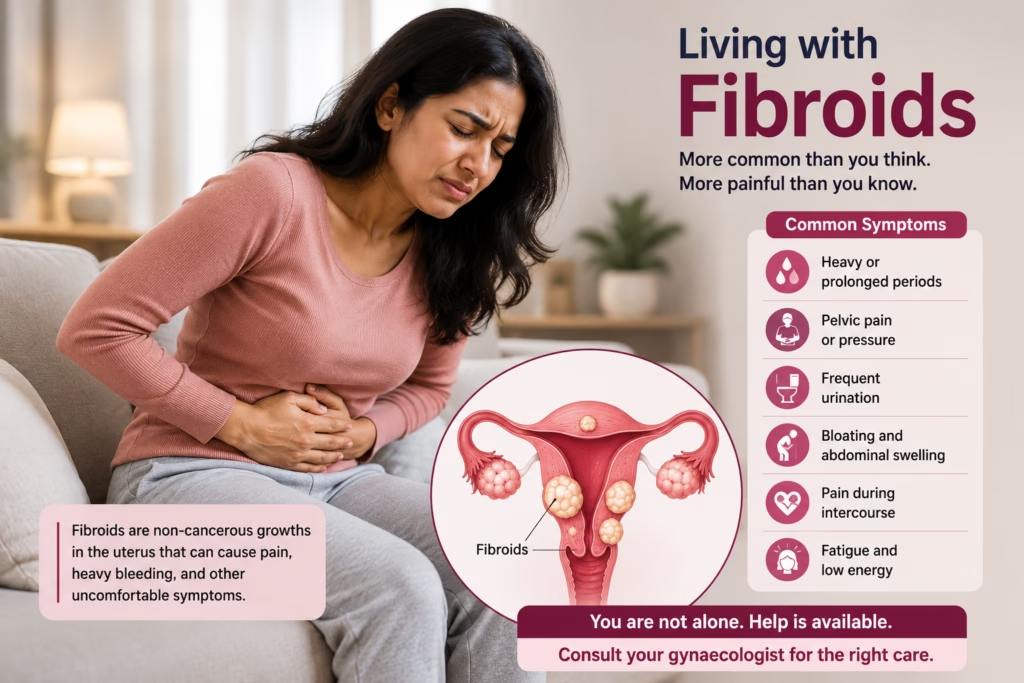
Many women are surprised to learn they have uterine fibroids. Some discover them during a routine health check-up, while others seek medical attention because of heavy periods, pelvic pain, or difficulty becoming pregnant.
One of the first questions I hear from patients is:
“Doctor, will I need to have my uterus removed?”
The answer is not always.
For many women, especially those who wish to preserve their uterus or plan for pregnancy in the future, a procedure called myomectomy can be an excellent treatment option.
This article explains what myomectomy is, who may need it, the different surgical approaches, recovery, and what to expect after surgery.
What Is a Myomectomy?
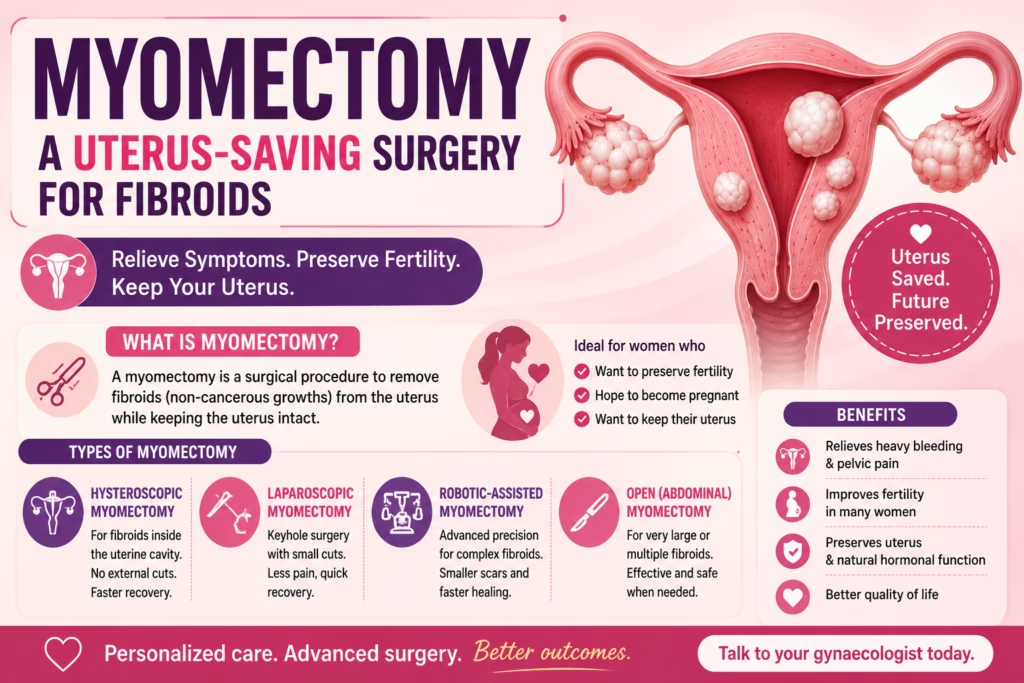
A myomectomy is a surgical procedure performed to remove uterine fibroids while preserving the uterus.
Unlike a hysterectomy, where the uterus is removed, myomectomy removes only the fibroids, allowing many women to retain their fertility and menstrual function.
It is often recommended for women who:
- Want to have children in the future
- Wish to keep their uterus
- Have troublesome fibroid-related symptoms
What Are Uterine Fibroids?
Fibroids are non-cancerous (benign) growths that develop within or on the uterus.
They are made up of muscle and fibrous tissue and can vary greatly in size—from tiny, seed-like nodules to large masses that enlarge the uterus.
Many women have fibroids without even knowing it.
Common Symptoms of Fibroids
Not every fibroid causes symptoms, but when they do, you may experience:
- Heavy menstrual bleeding
- Painful periods
- Pelvic pressure or heaviness
- Frequent urination
- Constipation
- Lower back pain
- Pain during intercourse
- Difficulty becoming pregnant
- Recurrent miscarriages
- Abdominal swelling or a feeling of fullness
If these symptoms interfere with your daily life, it’s important to consult a gynaecologist.
Who May Need a Myomectomy?
Myomectomy may be recommended if:
1. You Have Heavy Menstrual Bleeding
Large fibroids can cause prolonged or excessive bleeding, leading to:
- Fatigue
- Anaemia
- Reduced quality of life
2. You Experience Persistent Pelvic Pain
Fibroids can create pressure on surrounding organs, resulting in:
- Pelvic discomfort
- Lower back pain
- Pressure while sitting or walking
3. You Are Planning Pregnancy
Certain fibroids can interfere with:
- Fertilization
- Implantation
- Baby’s growth
- Labour and delivery
Removing selected fibroids may improve fertility in some women.
4. Fibroids Are Growing Rapidly
Regular monitoring helps determine whether a fibroid is increasing in size and whether treatment is needed.
5. Fibroids Affect Nearby Organs
Large fibroids may press on:
- The bladder, causing frequent urination
- The bowel, causing constipation
- The ureters, affecting urine flow in rare cases
Not Every Fibroid Needs Surgery
This is important to understand.
Many fibroids:
- Cause no symptoms
- Remain stable in size
- Require only regular follow-up
Treatment depends on:
- Symptoms
- Size and location of fibroids
- Age
- Fertility goals
- Overall health
Different Types of Myomectomy
The surgical approach depends on the number, size, and location of the fibroids.
1. Hysteroscopic Myomectomy
This is used for fibroids located inside the uterine cavity.
The surgeon inserts a thin telescope through the vagina and cervix without making any external cuts.
Advantages:
- No abdominal incision
- Short recovery
- Day-care procedure in many cases
- Minimal pain
2. Laparoscopic (Keyhole) Myomectomy
Suitable for many women with small to moderate-sized fibroids.
Several tiny incisions are made in the abdomen, and special instruments are used to remove the fibroids.
Benefits:
- Smaller scars
- Less pain
- Reduced blood loss
- Faster recovery
- Shorter hospital stay
3. Robotic-Assisted Myomectomy
In selected centres, robotic surgery provides enhanced precision, especially for complex cases.
Benefits are similar to laparoscopic surgery, with improved dexterity for the surgeon.
4. Open (Abdominal) Myomectomy
Sometimes an open surgery is the safest option, particularly when:
- Fibroids are very large
- There are many fibroids
- Their location makes minimally invasive surgery difficult
Although recovery takes longer, it remains an effective and safe procedure when indicated.
How Should You Prepare for Surgery?
Your doctor may recommend:
- Blood tests
- Pelvic ultrasound or MRI
- General health evaluation
- Anaesthesia assessment
In some cases, medications may be prescribed before surgery to temporarily shrink fibroids and reduce bleeding.
You will also receive instructions regarding fasting, medications, and hospital admission.
What Happens During a Myomectomy?
The exact procedure depends on the surgical approach.
In general:
- Anaesthesia is administered.
- The surgeon identifies the fibroids.
- The fibroids are carefully removed.
- The uterus is repaired with special sutures.
- The incisions are closed.
Every effort is made to preserve the healthy uterine tissue.
Recovery After Myomectomy
Recovery varies depending on the type of surgery.
Hysteroscopic Myomectomy
- Return home the same day in most cases
- Resume normal activities within a few days
Laparoscopic or Robotic Myomectomy
- Hospital stay of 1–2 days
- Return to normal activities in 2–4 weeks
Open Myomectomy
- Hospital stay of 2–4 days
- Recovery may take 4–6 weeks
Your doctor will provide individualized guidance based on your surgery and overall health.
Can You Get Pregnant After Myomectomy?
Yes. In fact, one of the main reasons for performing a myomectomy is to preserve or improve fertility.
Many women successfully conceive after the procedure, particularly if fibroids were affecting the uterine cavity or fertility.
Your doctor may recommend waiting 3 to 6 months before trying to conceive to allow the uterus to heal properly.
The recommended waiting period may vary depending on:
- The number of fibroids removed
- Their size and location
- The type of surgery performed
Will I Need a Caesarean Delivery Later?
Not every woman requires a caesarean section after a myomectomy.
The decision depends on:
- How deeply the uterine wall was repaired
- The number and location of fibroids removed
- Your obstetric history
Your obstetrician will discuss the safest mode of delivery during pregnancy.
Can Fibroids Come Back?
Unfortunately, yes.
A myomectomy removes existing fibroids but does not prevent new ones from developing.
The likelihood of recurrence depends on several factors, including age, hormonal influences, and the number of fibroids present at the time of surgery.
Regular follow-up is important after treatment.
Are There Any Risks?
Like any surgery, myomectomy carries some risks, including:
- Bleeding
- Infection
- Scar tissue formation (adhesions)
- Injury to nearby organs (rare)
- Recurrence of fibroids
- Rarely, the need for more extensive surgery if unexpected complications arise
Your surgeon will discuss these risks and the measures taken to minimize them.
When Should You See a Gynaecologist?
Don’t ignore symptoms such as:
- Heavy menstrual bleeding
- Severe pelvic pain
- Frequent urination due to pelvic pressure
- Difficulty conceiving
- Recurrent miscarriages
- Rapid increase in abdominal size
Early evaluation allows for more treatment options and better outcomes.
Final Thoughts
A diagnosis of uterine fibroids does not automatically mean you need to lose your uterus.
For many women, myomectomy offers an effective, uterus-preserving solution that relieves symptoms while maintaining the possibility of future pregnancy.
Advances in minimally invasive surgery have made recovery faster, scars smaller, and outcomes better than ever before. The key is choosing the right treatment based on your symptoms, reproductive plans, and overall health.
If fibroids are affecting your daily life or your fertility journey, don’t hesitate to seek expert advice. Together, we can develop a treatment plan that is personalized to your needs and helps you move forward with confidence.
Frequently Asked Questions (FAQs)
1. Is myomectomy a major surgery?
It depends on the type of procedure. Hysteroscopic and laparoscopic myomectomies are minimally invasive, while open myomectomy is considered major surgery.
2. Can fibroids become cancerous?
The vast majority of fibroids are benign (non-cancerous). Cancer arising from fibroids is extremely rare.
3. How long does recovery take?
Recovery ranges from a few days after hysteroscopic surgery to about 4–6 weeks after an open myomectomy.
4. Will my periods improve after surgery?
Many women experience lighter periods, less pain, and significant improvement in quality of life after myomectomy.
5. Can I still have children after a myomectomy?
Yes. Many women go on to have healthy pregnancies after a myomectomy, depending on their individual condition and overall fertility.

Dr. Mamta Pattnayak is working as a Additional Director in Gynae and Obstetrics Dept. in Fortis Hospital, Gurgaon. Dr. Mamta Pattnayak is an MBBS graduate from S.C.B. Medical College, Cuttack and completed her MD (Obstetrics & Gynaecology) from Sambalpur University in 2003. With a rich experience of over years to her credit, Dr. Mamta has undergone training on advance lap Gynae by Ethicon. Done hand’s on Colposcopy course by RCOG. She is certified as a mentor in RCOG training course in Max Hospital Saket. Dr. Mamta has been associated with several organizations like Moolchand Hospital, New Delhi besides others. Her last assignment was at Max Super Specialty Hospital, Saket, New Delhi. Recently she has also started her private clinic at: Mother’s Touch HealthCare Centre: 395P, Sector 39 Rd, opposite to Medanta Hospital, near Gurudwara, Sector 39, Gurugram, Haryana 122004