Introduction: “It’s Just Bad Period Pain”—Or Is It?
One of the most heartbreaking conversations I have with patients begins with the words:
“I’ve been living with this pain for years, but everyone kept telling me it was normal.”
Unfortunately, this is a reality for many women living with endometriosis.
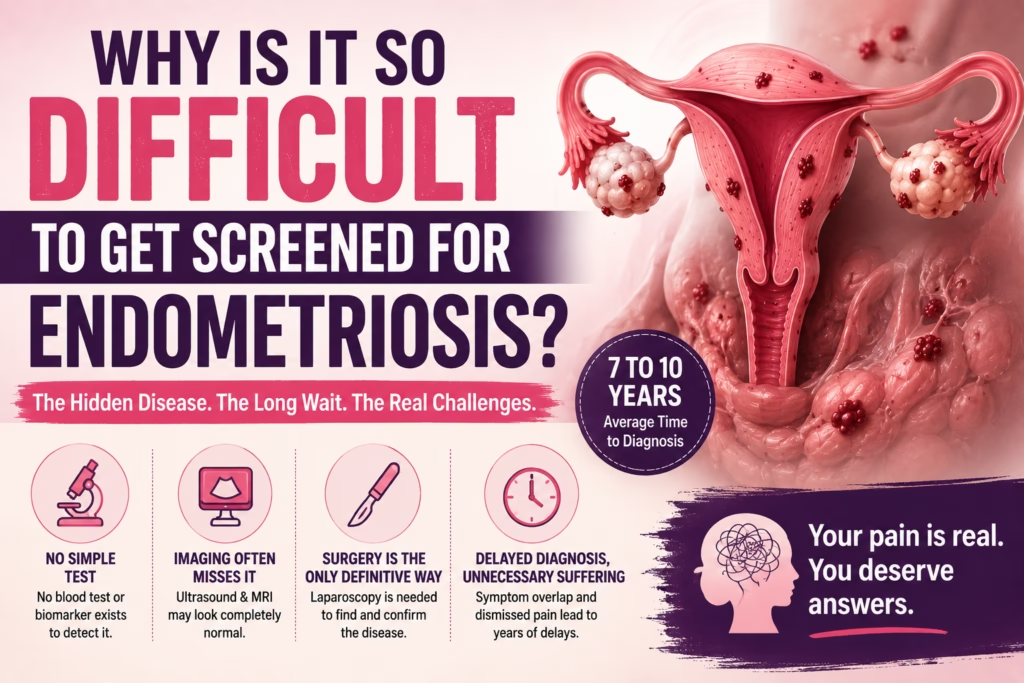
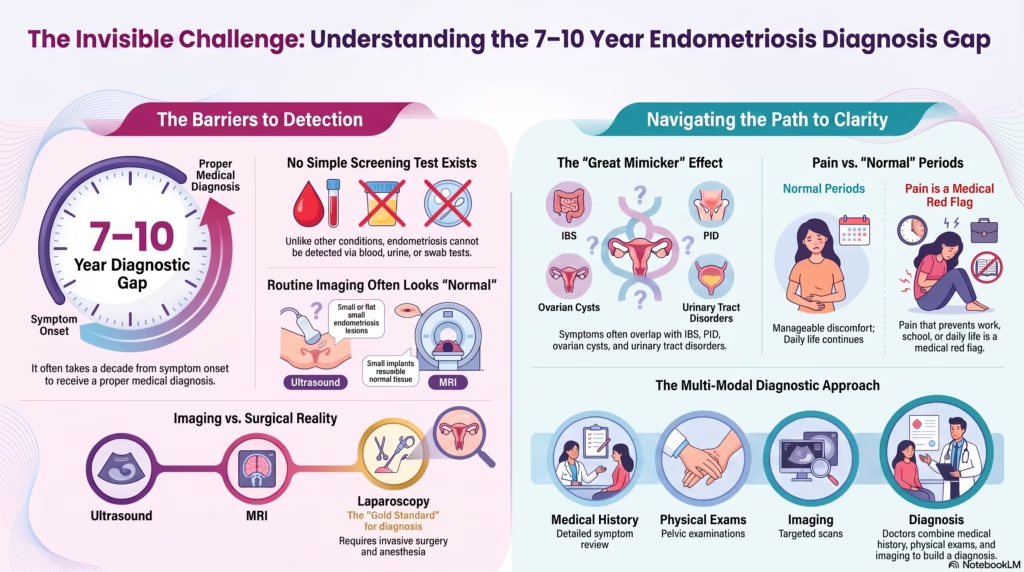
Studies have shown that it often takes 7 to 10 years from the onset of symptoms to receive a proper diagnosis. During this time, women may visit multiple doctors, undergo several tests, and try different medications—yet still have no clear answers.
This delay doesn’t happen because doctors don’t care. Rather, endometriosis is one of the most challenging gynaecological conditions to diagnose. Unlike many diseases that can be detected with a blood test or scan, endometriosis often remains hidden.
Let’s explore why diagnosing endometriosis is so difficult and why increasing awareness can make a significant difference.
What Is Endometriosis?
Endometriosis is a chronic condition in which tissue similar to the lining of the uterus grows outside the uterus.
These tissue deposits can develop on:
- The ovaries
- Fallopian tubes
- Pelvic lining
- Bladder
- Bowel
- Ligaments supporting the uterus
Like the normal uterine lining, these tissues respond to monthly hormonal changes. They can become inflamed, bleed, and irritate surrounding tissues during each menstrual cycle.
Over time, this may lead to:
- Chronic pelvic pain
- Scar tissue (adhesions)
- Ovarian cysts (endometriomas)
- Fertility problems
Why Does It Take So Long to Diagnose Endometriosis?
Many women are surprised to learn that there is currently no simple screening test for endometriosis.
Unlike diabetes or thyroid disorders, doctors cannot diagnose it with:
- A blood test
- A urine test
- A swab
- A routine health screening
This is one of the biggest reasons diagnosis is delayed.
There Is No Reliable Blood Test
Researchers around the world are actively searching for biomarkers that could identify endometriosis through blood or other body fluids.
However, no single blood test has yet been proven accurate enough for routine diagnosis.
This means doctors must rely on a combination of:
- Symptoms
- Medical history
- Physical examination
- Imaging studies
- Sometimes surgery
Why Routine Ultrasounds Often Look Normal
Many women feel frustrated when their ultrasound report says:
“Everything looks normal.”
This does not necessarily mean that nothing is wrong.
Most endometriosis lesions are:
- Extremely small
- Flat
- Hidden within surrounding tissues
These superficial lesions are simply too subtle to be seen on a routine pelvic ultrasound.
Ultrasound is excellent for detecting:
- Ovarian cysts
- Fibroids
- Pregnancy-related concerns
But it is not designed to detect every type of endometriosis.
Can MRI Detect Endometriosis?
MRI scans provide much more detailed images than routine ultrasounds.
They can identify:
- Deep infiltrating endometriosis
- Large ovarian endometriomas
- Disease affecting nearby organs
However, even MRI has limitations.
Small or superficial endometriosis implants often remain invisible because they closely resemble normal surrounding tissues.
An MRI may therefore appear normal even when endometriosis is present.
The Challenge of “Invisible” Disease
One of the biggest challenges with endometriosis is that the amount of pain does not always match what appears on imaging.
Some women have:
- Extensive disease with very little discomfort.
Others experience:
- Severe, life-disrupting pain despite having only tiny lesions.
This mismatch often creates confusion for both patients and healthcare providers.
Why Surgery Is Sometimes Needed
Currently, the most definitive way to diagnose endometriosis is through a laparoscopy.
This is a minimally invasive surgical procedure performed under general anaesthesia.
During laparoscopy:
- Small incisions are made in the abdomen.
- Carbon dioxide gas gently inflates the abdomen to create space.
- A tiny camera (laparoscope) is inserted to inspect the pelvic organs.
- The surgeon looks for suspicious endometriosis lesions.
If abnormal tissue is found, it is usually removed or biopsied and sent to a laboratory for confirmation.
Because laparoscopy is still a surgical procedure—with associated costs, anaesthesia, and recovery—it is not recommended as the first investigation for every woman with pelvic pain.
Instead, doctors carefully weigh:
- Symptoms
- Clinical examination
- Imaging findings
- The impact on daily life
- Fertility goals
before deciding whether surgery is appropriate.
Endometriosis Can Mimic Many Other Conditions
Another major reason diagnosis is delayed is that the symptoms overlap with several other disorders.
Endometriosis can resemble:
- Irritable Bowel Syndrome (IBS)
Bloating, constipation, diarrhoea, abdominal pain - Pelvic Inflammatory Disease (PID)
Pelvic discomfort and pain - Ovarian Cysts
Lower abdominal pain - Urinary Tract Disorders
Painful urination - Musculoskeletal Conditions
Lower back or hip pain
Because of this overlap, women are sometimes treated for other conditions before endometriosis is considered.
Why Period Pain Is Often Dismissed
Perhaps one of the most important reasons for delayed diagnosis is the long-standing belief that:
“Painful periods are just part of being a woman.”
While mild menstrual cramps are common, pain that prevents you from attending school, going to work, exercising, or enjoying daily life is not normal.
Many women spend years believing they simply have a “low pain tolerance” when, in reality, they have a medical condition that deserves attention.
When Medications Mask the Problem
Hormonal treatments, including birth control pills, are commonly used to manage painful periods.
For many women, these medications provide significant relief and are an appropriate part of treatment.
However, if symptoms improve without identifying the underlying cause, diagnosis may be delayed. In some cases, the disease may continue to progress silently while the pain remains partially controlled.
This is why regular follow-up and reassessment are important, especially if symptoms return or worsen.
Who Is More Likely to Have Endometriosis?
You may have a higher likelihood of endometriosis if you experience:
- Severe menstrual pain
- Chronic pelvic pain
- Pain during intercourse
- Pain during bowel movements during your period
- Difficulty becoming pregnant
- A close family member with endometriosis
These symptoms do not confirm the diagnosis, but they should prompt further evaluation.
How Is Endometriosis Diagnosed Today?
Rather than relying on a single test, diagnosis is based on a combination of:
Detailed Medical History
Understanding the timing, severity, and pattern of symptoms.
Pelvic Examination
Looking for tenderness, nodules, or other clinical signs.
Ultrasound
Useful for identifying ovarian endometriomas and other pelvic abnormalities.
MRI
Helpful in selected cases, particularly when deep endometriosis is suspected.
Laparoscopy
Reserved for situations where diagnosis remains uncertain, symptoms are severe, fertility is affected, or surgery is likely to improve treatment.
The Future of Endometriosis Diagnosis
Researchers are working to develop less invasive ways to diagnose endometriosis.
Areas of ongoing research include:
- Blood-based biomarkers
- Saliva and menstrual fluid testing
- Artificial intelligence-assisted ultrasound and MRI interpretation
- Advanced imaging techniques
Although these innovations are promising, they are not yet part of routine clinical practice.
The hope is that future advances will reduce diagnostic delays and help women receive treatment much earlier.
When Should You See a Gynaecologist?
Please seek medical advice if you experience:
- Severe period pain that affects daily life
- Pelvic pain between periods
- Pain during intercourse
- Heavy menstrual bleeding
- Persistent bloating
- Difficulty becoming pregnant
You know your body best. If something doesn’t feel right, it deserves to be evaluated.
Final Thoughts: Your Pain Is Real
Endometriosis is often called an “invisible disease” because it cannot always be seen on routine tests. But just because it is difficult to detect does not mean your symptoms are imaginary.
Today’s diagnostic tools have improved significantly, and experienced gynaecologists can often recognise patterns that point toward endometriosis even before surgery is considered.
Most importantly, severe menstrual pain should never be accepted as “normal.” If your periods regularly interfere with your education, work, relationships, or quality of life, it is time to seek expert care.
Early recognition, appropriate investigations, and personalised treatment can help relieve symptoms, protect fertility, and improve your overall well-being.
Key Takeaway
Endometriosis is challenging to diagnose—not because the symptoms aren’t real, but because the disease often hides from routine tests. The sooner persistent pelvic pain is investigated by an experienced gynaecologist, the sooner you can receive the care and support you deserve.

Dr. Mamta Pattnayak is working as a Additional Director in Gynae and Obstetrics Dept. in Fortis Hospital, Gurgaon. Dr. Mamta Pattnayak is an MBBS graduate from S.C.B. Medical College, Cuttack and completed her MD (Obstetrics & Gynaecology) from Sambalpur University in 2003. With a rich experience of over years to her credit, Dr. Mamta has undergone training on advance lap Gynae by Ethicon. Done hand’s on Colposcopy course by RCOG. She is certified as a mentor in RCOG training course in Max Hospital Saket. Dr. Mamta has been associated with several organizations like Moolchand Hospital, New Delhi besides others. Her last assignment was at Max Super Specialty Hospital, Saket, New Delhi. Recently she has also started her private clinic at: Mother’s Touch HealthCare Centre: 395P, Sector 39 Rd, opposite to Medanta Hospital, near Gurudwara, Sector 39, Gurugram, Haryana 122004